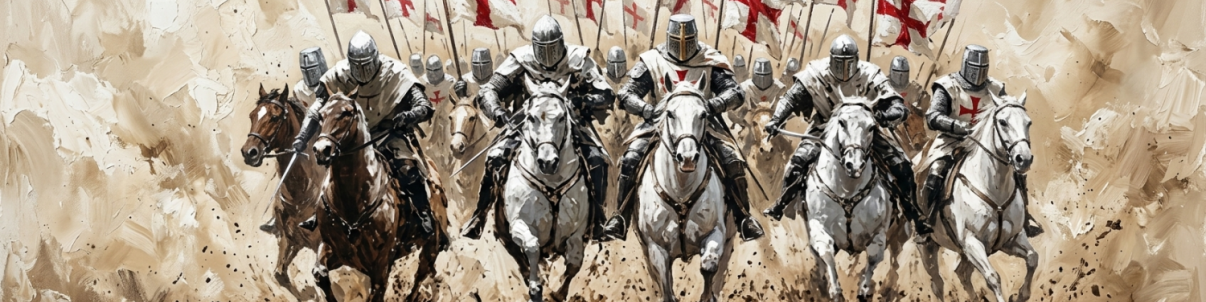
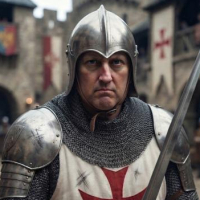
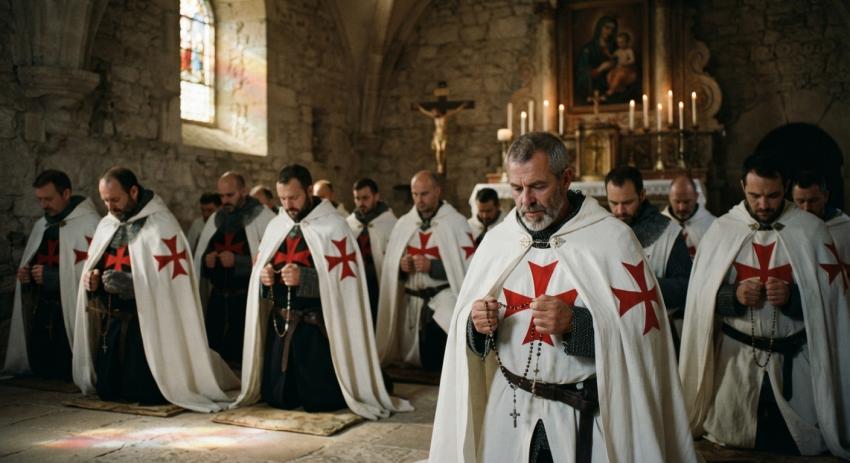
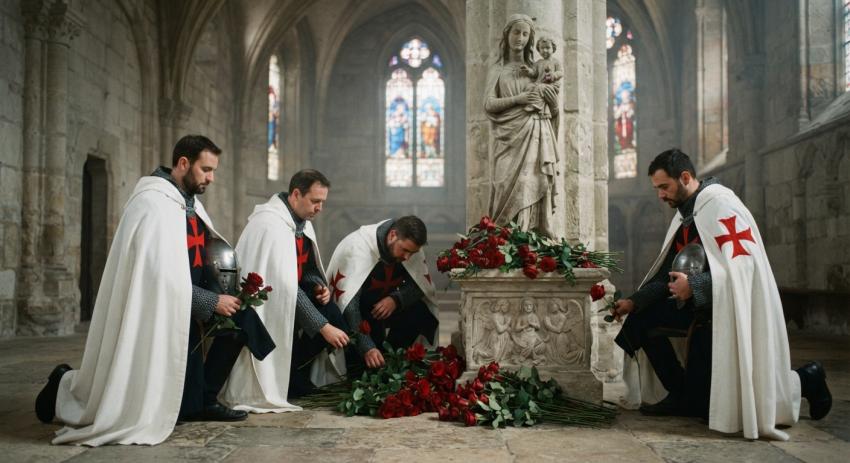
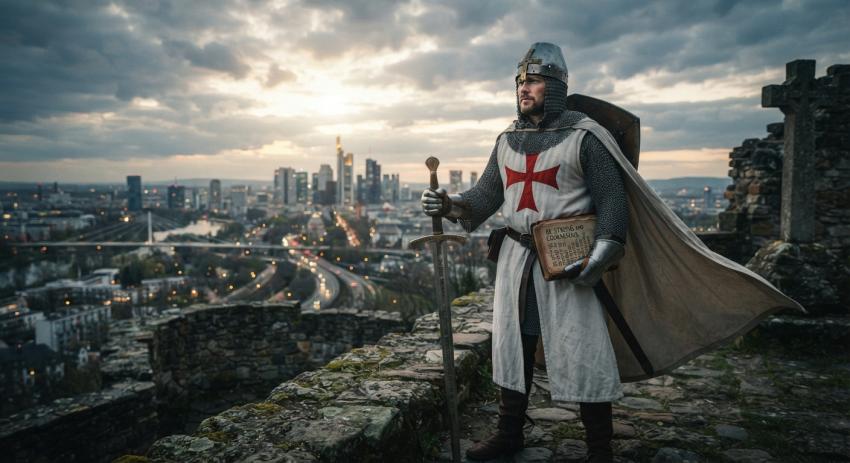
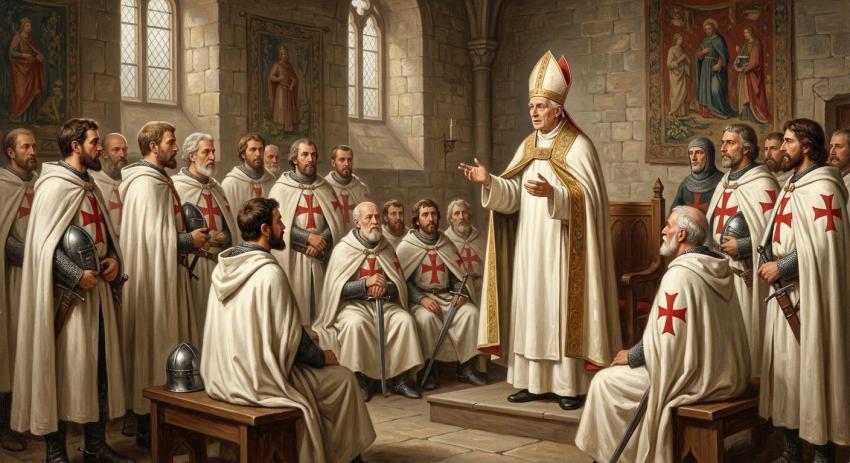
For a modern Knight Templar, Mother Mary represents the ultimate spiritual anchor, embodying the divine feminine principles of unconditional compassion, sanctuary, and unyielding strength. Historically viewed by the medieval Order as their patroness, protector, and queen, she continues to serve today as a transcendent archetype of purity and grace that balances the militant and protective duties of modern chivalry. Rather than wielding physical swords, contemporary Templars look to her as a mora... moreFor a modern Knight Templar, Mother Mary represents the ultimate spiritual anchor, embodying the divine feminine principles of unconditional compassion, sanctuary, and unyielding strength. Historically viewed by the medieval Order as their patroness, protector, and queen, she continues to serve today as a transcendent archetype of purity and grace that balances the militant and protective duties of modern chivalry. Rather than wielding physical swords, contemporary Templars look to her as a moral compass, inspiring a life dedicated to charity, the defense of the vulnerable, and the preservation of spiritual traditions.
In the context of 2026, where modern chivalry often manifests through humanitarian work, interfaith diplomacy, and cultural preservation, devotion to Mother Mary grounds a Templar's daily discipline in humility and mercy. She represents a sacred refuge against the moral complexities of the modern world, reminding knights and dames of the order to temper their strength with profound empathy. Ultimately, she is viewed as the spiritual mother who unifies diverse traditions and guides her followers toward inner justice, peace, and steadfast devotion to higher laws.
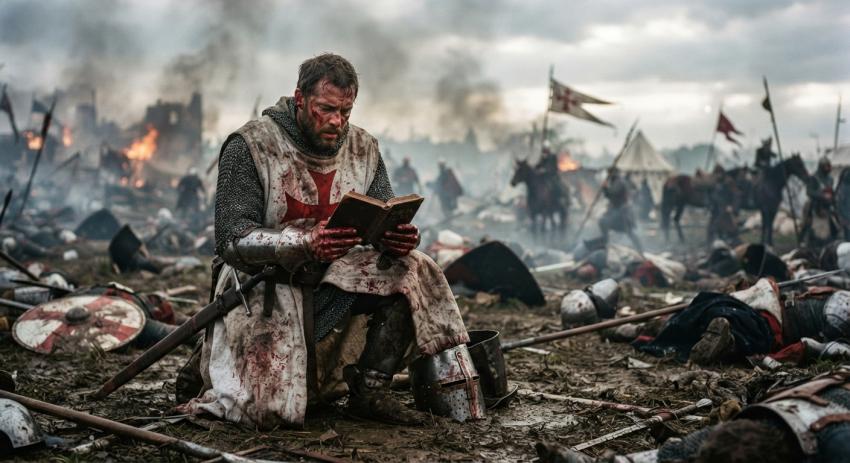
The weight of the modern world presses harder on the soul than any physical mail ever could, and tonight, my spirit feels utterly shattered beneath the neon noise of 2026. Centuries have passed since the white mantles and red crosses rode across the dust of the Levant, yet the eternal war remains unchanged—fought now not with iron swords, but against the hidden principalities and unseen despair of a fractured age. When the armor grows too heavy and the midnight vigil feels forgotten by heaven it... moreThe weight of the modern world presses harder on the soul than any physical mail ever could, and tonight, my spirit feels utterly shattered beneath the neon noise of 2026. Centuries have passed since the white mantles and red crosses rode across the dust of the Levant, yet the eternal war remains unchanged—fought now not with iron swords, but against the hidden principalities and unseen despair of a fractured age. When the armor grows too heavy and the midnight vigil feels forgotten by heaven itself, I remember that endurance is our truest vow. We are never meant to bear this crusade in our own strength; rather, we are called to stand fast in the quiet shelter of grace, trusting that even the longest night yields to the dawn of the Almighty.
In this hour of exhaustion, I lift my eyes from the concrete wilderness and cling to the ancient promise: "Be strong and courageous. Do not be frightened; do not be dismayed, for the Lord your God is with you wherever you go" (Joshua 1:9). Let the modern world rush by in its frantic pace, for the true Templar keeps watch in the sanctuary of an unwavering faith, knowing that he who endures to the end shall wear a crown far more enduring than any earthly kingdom.
For a Knight Templar in 2026, the legacy of Saint Thomas of Villanova serves as a powerful reminder of the chivalric duty to defend and uplift the vulnerable. Just as the historic Templars protected pilgrims and embodied Christian charity through action, Saint Thomas demonstrated that true spiritual leadership requires a relentless, hands-on commitment to the poor and marginalized. By transforming charitable giving into a structured, accountable system that directly served those in genuine need,... moreFor a Knight Templar in 2026, the legacy of Saint Thomas of Villanova serves as a powerful reminder of the chivalric duty to defend and uplift the vulnerable. Just as the historic Templars protected pilgrims and embodied Christian charity through action, Saint Thomas demonstrated that true spiritual leadership requires a relentless, hands-on commitment to the poor and marginalized. By transforming charitable giving into a structured, accountable system that directly served those in genuine need, he modeled a disciplined approach to stewardship. In today's complex world, modern Templars can look to his 16th-century ministry as a call to ensure that their own charitable efforts are strategic, impactful, and rooted in authentic personal sacrifice rather than mere convenience.
Furthermore, Saint Thomas's journey from a university scholar and Augustinian friar to a reforming Archbishop highlights the vital intersection of intellectual rigor and pastoral service. For a modern order dedicated to preserving Christian heritage and values, his example encourages members to engage their communities with both moral clarity and profound compassion. By honoring the "Father of the Poor," a Knight Templar is challenged to live out the foundational tenets of the faith—humility, justice, and active benevolence—bridging ancient traditions of service with the pressing humanitarian demands of the 21st century.
As a soldier of Christ bound by sacred vows, a Knight Templar stands firmly opposed to the rise of artificial intelligence, viewing it not as a triumph of human ingenuity, but as a profound spiritual peril. True wisdom, discernment, and dominion over creation are divine gifts bestowed exclusively upon mankind, whom God fashioned in His own image (Genesis 1:27). An artificial entity, devoid of a living soul and incapable of true divine communion, represents a dangerous counterfeit of life. By att... moreAs a soldier of Christ bound by sacred vows, a Knight Templar stands firmly opposed to the rise of artificial intelligence, viewing it not as a triumph of human ingenuity, but as a profound spiritual peril. True wisdom, discernment, and dominion over creation are divine gifts bestowed exclusively upon mankind, whom God fashioned in His own image (Genesis 1:27). An artificial entity, devoid of a living soul and incapable of true divine communion, represents a dangerous counterfeit of life. By attempting to replicate the divine breath of consciousness through cold logic and silicon, humanity trespasses into forbidden territory, substituting God-ordained faith with a mechanical idol that whispers the ancient temptation of self-deification.
Furthermore, the Templar's spiritual warfare is fundamentally directed against principalities, powers, and the rulers of the darkness of this age (Ephesians 6:12), rather than flesh and blood. When society delegates moral decision-making, warfare, and judgment to autonomous systems, it strips away human accountability and the capacity for genuine repentance. A machine cannot possess a conscience, nor can it experience the transforming grace of redemption through Christ. To embrace AI as an autonomous arbiter of human destiny is to surrender the free will granted by God, inviting a spiritual blindness that separates man from his Creator and replaces the living Spirit with the sterile tyranny of the machine.
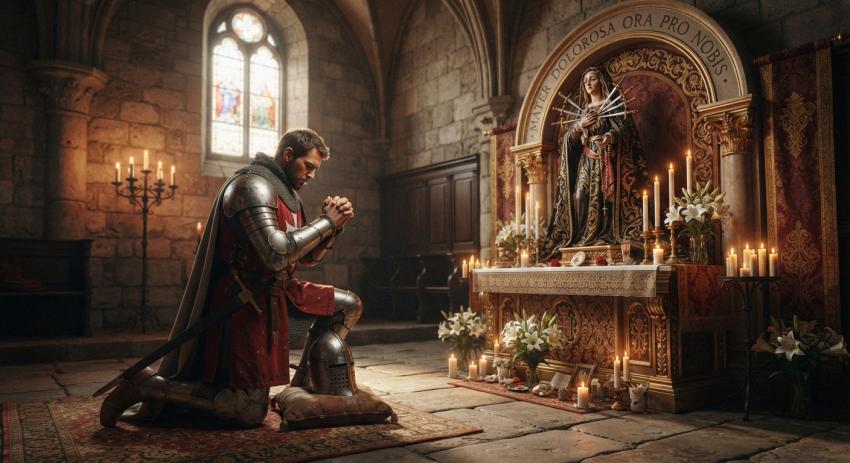
To a modern-day Knight Templar in 2026—whether part of a contemporary fraternal order or an esoteric chivalric tradition—Our Lady of Sorrows represents the ultimate blueprint for spiritual warfare, tragic duty, and unyielding fidelity in a fragmented world. Historically, the Templars claimed Mary as their primary patroness, but the specific lens of the Mater Dolorosa transforms her into a symbol of passive fortitude. Her iconic posture standing faithfully at the foot of the Cross (Stabat Mater) ... moreTo a modern-day Knight Templar in 2026—whether part of a contemporary fraternal order or an esoteric chivalric tradition—Our Lady of Sorrows represents the ultimate blueprint for spiritual warfare, tragic duty, and unyielding fidelity in a fragmented world. Historically, the Templars claimed Mary as their primary patroness, but the specific lens of the Mater Dolorosa transforms her into a symbol of passive fortitude. Her iconic posture standing faithfully at the foot of the Cross (Stabat Mater) while the world fled models how a modern knight must remain an unshakeable visual anchor of faith amidst cultural and institutional decay.
Furthermore, because the historical order was brutally betrayed and dissolved in the 14th century, Mary serves as a comforting maternal figure who intimately understands the pain of unjust persecution, isolation, and institutional collapse.Through this devotion, the traditional "sword of sorrow" that pierced Mary's soul radically redefines the primary weapon of a modern Templar. Instead of physical combat, the sword signifies that a true knight’s heart must not be hardened; rather, a knight must possess the profound chivalric empathy to let their own soul be pierced by the suffering of the world. Her Seven Sorrows are not viewed as moments of defeat, but as internal spiritual battles met with absolute dignity. By meditating on the Queen of Martyrs, a 2026 Templar learns to transform personal grief, societal hostility, and betrayal into fuel for the interior battlefield, proving that enduring trauma with resilience is the highest form of modern Christian chivalry.
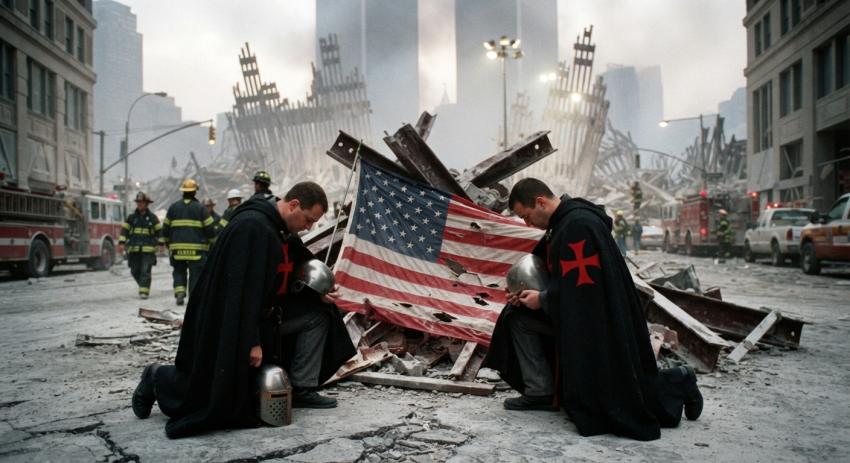
A full twenty-five years have now passed since the morning the sky fell, a milestone that transformed what was once a raw, immediate trauma into a permanent chapter of our national inheritance. For many of us, the memories of September 11, 2001, remain etched in our souls with absolute clarity—the smoke, the sirens, and the sudden, aching silence. Yet, we must recognize that an entire generation has now come of age with no personal memory of that world-shaking day. As Knights of the Temple, our ... moreA full twenty-five years have now passed since the morning the sky fell, a milestone that transformed what was once a raw, immediate trauma into a permanent chapter of our national inheritance. For many of us, the memories of September 11, 2001, remain etched in our souls with absolute clarity—the smoke, the sirens, and the sudden, aching silence. Yet, we must recognize that an entire generation has now come of age with no personal memory of that world-shaking day. As Knights of the Temple, our charge in 2026 is not merely to look backward in grief, but to stand as living sentinels of memory, ensuring that the legacy of the fallen is faithfully passed to the future generations of our nation.
In the immediate crucible of that tragedy, the ancient vows of our Order—defense of the faith, protection of the vulnerable, and unwavering fidelity to Christ—were not just abstract ideals; they became a vital spiritual armor for a wounded nation. We remember the heroes who ran toward the smoke that day and perished, embodying the ultimate measure of our fractured world's need for Christ-like sacrifice. From the immediate mobilization of aid to the quiet, enduring care given to the widows, widowers, and their children, our chivalric brotherhood answered transnational hatred with an outpouring of steadfast love. This anniversary reminded us that true honor is not defined by worldly power alone, but by a fierce, sworn commitment to defend one another. It calls us to embody the truth of Greater Love, as spoken in the Gospel of John, that:
"No one has greater love than this, to lay down one’s life for one’s friends." (John 15:13)
Twenty-five years later, America is in need of a deep spiritual reckoning. The passage of time can breed a dangerous complacency, allowing the profound national unity we felt in the wake of the attacks to erode into division, discord, and tribalism. Our culture often forgets that the strength of a nation lies not in its economic skyscrapers or its military fortresses, but in its moral fiber and its reliance on the Almighty. As Christian knights, we are called to lead our families and communities back to the bedrock of faith, reminding a wandering world that true security is found only under the shadow of the Most High. We must be the architects of a peace built on justice, keeping alive the sacred duty of prayer and vigilance for the victims and heroes of September 11th.
Therefore, let us come together with a renewed resolve to truly "Never Forget"—not just the horror of the towers falling, but the beauty of a nation rising in solidarity. Let us honor the nearly three thousand innocent souls lost, the first responders whose sacrifice still echoes, and those who continue to succumb to the lingering illnesses of Ground Zero.
As we look ahead to the next quarter-century, let us arm ourselves with the resilience of the scriptures, standing firm as protectors of our faith and our country. We draw our final strength from the words of the Prophet Isaiah, a timeless mandate for a nation that has walked through the fire and continues to look toward the eternal dawn:
"But those who wait for the Lord shall renew their strength, they shall mount up with wings like eagles, they shall run and not be weary, they shall walk and not faint." (Isaiah 40:31)
Non Nobis Domine, Non Nobis, Sed Nomini Tuo Da Gloriam!