

How good and pleasant it is, when brethren live in unity! (Psalm 133:1)
As we profess to be members of the Templar order, what does the Ancient Rule of the Templars mean for us from the vantage point of our modern times? Does it even have any applicability at all?
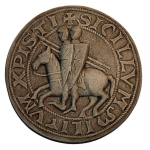
The original Templars were a monastic Order, following the Ancient Rule of the Poor Soldiers of Christ and the Temple of Solomon. Every aspect of their lives was governed by monastic rules adopted from those of the Cistercian monastic order. For example, the first Templars prayed seven times a day. Since most could not read or speak Latin, this generally consisted of many repetitions of the Lord’s Prayer. How they dressed, how they conducted themselves, when and what they ate, were spelled out, but adapted to the needs of men who had to be ready to fight at any time. For example, unlike other monks who could only eat fish and eggs, Templars were allowed to eat meat three times a week, but never on a Friday!
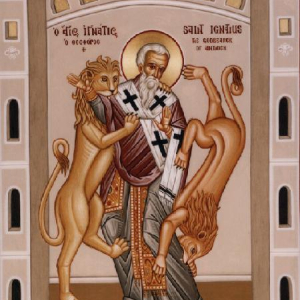
The Rule allowed knights to have horses and servants to maintain them. But they were forbidden to wear immoderately long hair and elaborate beards, shoes with long curling points, lacy frills, or excessively long tunics like the secular knights of their time. Hunting and hawking were also forbidden, with the exception of lion hunting, “because he [the lion] is always searching for someone to devour and his strength is against all so all strength is against him.” Not all the danger in a pilgrimage was from human attackers. There was a biblical analogy here, that of defending against the lion falling upon the flock of faithful pilgrims.
Other sections of the Rule concern behavior at meals, caring for brothers who become ill, and other common customs of monastic life; for instance, all property was kept in common and prayers were said seven times a day. Since many knights could not speak or read Latin, they were told to simply repeat the Lord’s Prayer at the correct times.
Every item of clothing and equipment, even down to the cloth used, was specified for each member of the Order. Fabrics used for their habits were of poor-quality linen; only slightly better-quality fabric was used for knights’ habits than for the other Templars. Unusual for the standards of the time, every Templar was given changes of undergarments and outer-garments. This was because hygiene was important—even though they had to ask the Commander of their chapter for permission to have a bath. Too many baths were forbidden as this was believed to weaken the health and strength.
Since secular knights had a reputation for sexual conquests, two sections of the Rule make it clear that they were not even to kiss their own mothers or sisters. “We believe it dangerous for any man of religion to pay too much attention to the faces of women; therefore no brother may take the liberty of kissing a widow, nor a virgin nor his mother, nor his sister, nor his friend, nor any other woman.” This was taken for granted in most monastic houses, where the monks spent most of their time well out of sight of any female temptation.
Some married men joined briefly, but they did not undergo monastic training and their wives did not accompany them, as the Rule insisted on chastity. To prevent any bad influence, their sleeping quarters were kept separate from the permanent, celibate Templars.
Now, you might have noticed that we do not follow the same rules. How many of you would be members if we did? Many of us are married, we do not live together in cloistered barracks separate from society, nor are our lives regulated to such a degree as theirs. I would also point out that our Order is not under the authority of any specific Christian Church or episcopacy, while the original Templars answered to the Catholic Pope. We operate under our own authority. We, by which I mean the Order, define how we shall live in a Christian manner. Which begs the question, how should we live if we are to follow in the footsteps of our spiritual knightly ancestors?
Inspired by that ancient rule, we modern Templars should strive to hold ourselves to a higher standard. We emulate the spirit of the Templars, if not the specific rule. To that end, our Order has established statutes and practices that are central to the life and witness of our Order and bind us to mutual accountability. While we do not take monastic vows, we endeavor to achieve a level of self-discipline and dedication to the principles practiced by our forebears. If you have not done so, or if it has been a while since you last read them, I recommend you read and re-read the Statutes of the Order. They are posted on the OMSDT website and have been posted on Belief Book. Or you can always ask me for a .pdf copy, to print out and always have it close at hand.
These statutes outline principles to guide how we conduct ourselves as modern Templars. The statutes do not tell us when we can eat meat, or how we must dress. Rather than dictating our personal prayer lives, our Statutes assume that we are ardently following Christ our Lord in reverence and repentance, that we are participating regularly in our local Church, with an active prayer life, and conducting ourselves in a manner that honors Christ and obeys His commandments.
The Statutes of the Order begins with the following statement: “We hereby set forth the following guiding principles of the OMSDT Grand Priory of America, in order to reaffirm the charter of our founders and to ensure that our Grand Priory is never corrupted or compromised in its principles. As the OMSDT Grand Priory of America has entered the Third Millennium after the advent of our Lord, we hold the following articles indefeasible and central to the legitimacy and continued survival of the Grand Priory of America.” Indefeasible means “not able to be lost, annulled, or overturned”.
The seventeen articles that follow lay out a vision of principles to preserve the ancient spirit of those original Templars in a modern world. While we are not actively engaged in armed warfare against anti-Christian forces, we still have a mission. We do not conduct cavalry charges or defend pilgrims from desert marauders, but we are living in a society that, in many ways, is openly hostile to a Christian life in very pernicious ways.
Our Statutes do lay out some specific rules that harken directly back to the Ancient Rule, specifically Article XVII: “The OMSDT Grand Priory of America will forever hold sacred the five indefeasible (there’s that word again) rules (there’s that word again) of our Grand Priory:
- The Temple and Service thereof, for we are the spiritual descendants of the original Nine Knights of the Order, who first held their conclaves in the Holy Temple in Jerusalem, and we look forward to its rebuilding;
- The Love of Meditation, for we must continually look into our own souls, and ask ourselves if we are truly following in the footsteps of the Master;
- Discipline, for the principles laid down for the Grand Priory by our patron saint, Bernard of Clairvaux, are still valid today, and we must remember that we are standard-bearers for our faith, and never forget that in all personal choices we set an example, whether good or bad;
- Knightly Combat, for the Blood Red Cross that we wear reminds us that sacrifices are often required of the faithful, and we must always be willing to battle the forces of evil in the spiritual realm. Today’s Templars are faced with a spiritual battle instead of a physical one;
- Brotherhood and Sisterhood, in that each day we must help our brethren, for one day our Lord shall ask us, “Where is thy brother and thy sister?”; and on that day we shall have to give an account of ourselves. We must not accept reward, but always be pillars of the Temple, for all the Grand Priory holds for us is the opportunity to flee the sins of the world, to live charitably, to be penitent, and above all, to be the humble servant of Almighty God.
So, how do we put that into practice? If we are no longer monastics, or engaged in fighting marauders in the Outremer, what are we doing?
For that answer we look to another valuable resource, the Templar Manual, which states: “we continue to enable ordinary Christian men and women to live extraordinary lives of service to God by touching the lives of others!” In other words, the Order is here to challenge all of us:
- To go "all in" as did those Templars who came before us
- To give more of ourselves
- To love those we may not have even noticed before
- To reorder our own priorities through our participation to put Christ first and foremost in our lives
We do this through Brotherhood, service, communication
More from our Manual:
This is not a club, we are a brotherhood. We support each other, we pray for each other, we care for each other, we serve Our Lord with each other. If you do not know who your fellow members are, it is not because we have not encouraged it, advocated it or supported it. We are brothers and sisters in this priory who pledge to be there for each other, even as did those monastic knights of old.
We are challenged to service, individually and as an organization. To be a true Christian is to be like Christ in all aspects of our lives. Christ always reached out to people. He went to those who were rejected by society and the establishment of his day and helped them both spiritually and in their physical needs. We seek to do the same. How can we not? The resurrected Christ asked St Peter "Do you love me?" when Peter said that he did, Christ told him "Feed my lambs". Loving Christ means serving others.
Another important activity is communication. It is expected you will be in frequent contact with other members of your priory and commandery. In addition to Priory Meetings, we all should be posting on our own “Belief Book” often. Here we report what is going on with us in Roll Call and in the Prayer Circle. Please encourage your brothers and sisters to join us in these biweekly National Round Table Zoom meetings. We are not alone, we have fellowship any time, every day, through our social media, and hopefully in the near future, we can meet face-to-face in local commanderies!
Through these activities we try our best to emulate the spirit of the ancient Templars, following the ancient Rule in the following ways:
- In their unfailing faith in our Lord, God and Savior, Christ Jesus
- In their dedication to serve and protect Christendom
- In their loyalty to each other
- In their courage in the face of any odds, to be first to fight and never to leave the field of battle as long as the Beaucent stood waving proud



CAA Patricia Fraser
Priory of St. Michael the Archangel
Fides Et Veritas