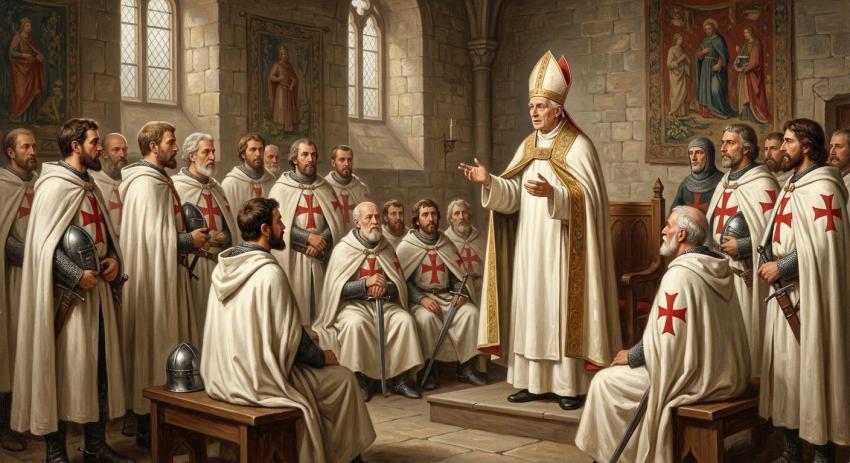
For a Knight Templar in 2026, the legacy of Saint Thomas of Villanova serves as a powerful reminder of the chivalric duty to defend and uplift the vulnerable. Just as the historic Templars protected pilgrims and embodied Christian charity through action, Saint Thomas demonstrated that true spiritual leadership requires a relentless, hands-on commitment to the poor and marginalized. By transforming charitable giving into a structured, accountable system that directly served those in genuine need,... moreFor a Knight Templar in 2026, the legacy of Saint Thomas of Villanova serves as a powerful reminder of the chivalric duty to defend and uplift the vulnerable. Just as the historic Templars protected pilgrims and embodied Christian charity through action, Saint Thomas demonstrated that true spiritual leadership requires a relentless, hands-on commitment to the poor and marginalized. By transforming charitable giving into a structured, accountable system that directly served those in genuine need, he modeled a disciplined approach to stewardship. In today's complex world, modern Templars can look to his 16th-century ministry as a call to ensure that their own charitable efforts are strategic, impactful, and rooted in authentic personal sacrifice rather than mere convenience.
Furthermore, Saint Thomas's journey from a university scholar and Augustinian friar to a reforming Archbishop highlights the vital intersection of intellectual rigor and pastoral service. For a modern order dedicated to preserving Christian heritage and values, his example encourages members to engage their communities with both moral clarity and profound compassion. By honoring the "Father of the Poor," a Knight Templar is challenged to live out the foundational tenets of the faith—humility, justice, and active benevolence—bridging ancient traditions of service with the pressing humanitarian demands of the 21st century.