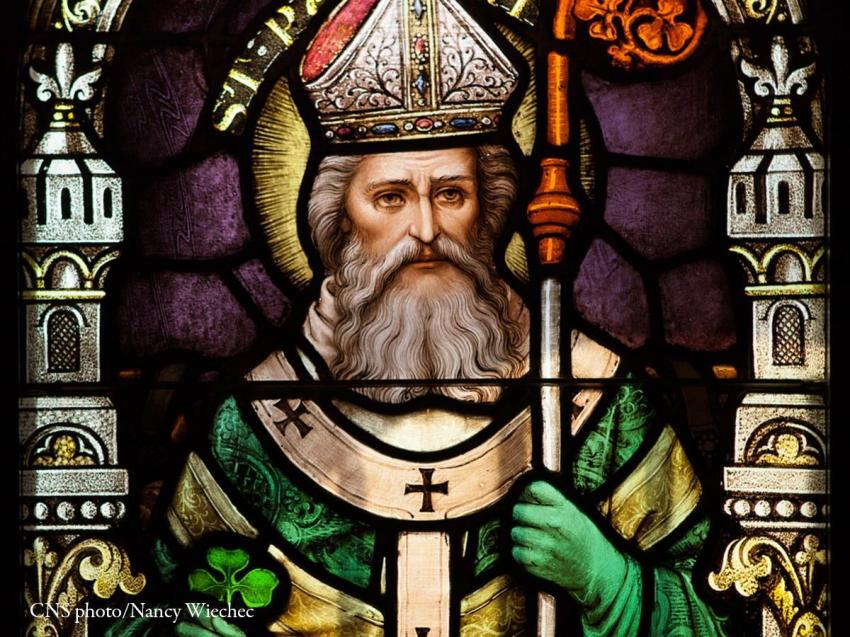
🍀𝐒𝐭. 𝐏𝐚𝐭𝐫𝐢𝐜𝐤🍀
𝑊𝑟𝑖𝑡𝑡𝑒𝑛 𝑏𝑦 𝐺𝑆𝑌 𝑅𝑒𝑛𝑒𝑒' 𝑁𝑜𝑟𝑑𝑖𝑜
𝑃𝑟𝑖𝑜𝑟, 𝐾𝑖𝑛𝑔 𝐷𝑎𝑣𝑖𝑑 𝑃𝑟𝑖𝑜𝑟𝑦
𝐶𝑜𝑟𝑑𝑖𝑠 𝑎𝑑 𝐷𝑒𝑢𝑚
St. Patrick, the patron saint of Ireland, is one of Christianity's most widely known figures. But for all his celebrity, his life remains somewhat of a mystery. Many of the stories traditionally associated with St. Patrick, including the famous account of his banishing all the snakes from Ireland, are false, the product of hundreds of years of exaggerated storytelling.
It is known that St. Patrick was b... more🍀𝐒𝐭. 𝐏𝐚𝐭𝐫𝐢𝐜𝐤🍀
𝑊𝑟𝑖𝑡𝑡𝑒𝑛 𝑏𝑦 𝐺𝑆𝑌 𝑅𝑒𝑛𝑒𝑒' 𝑁𝑜𝑟𝑑𝑖𝑜
𝑃𝑟𝑖𝑜𝑟, 𝐾𝑖𝑛𝑔 𝐷𝑎𝑣𝑖𝑑 𝑃𝑟𝑖𝑜𝑟𝑦
𝐶𝑜𝑟𝑑𝑖𝑠 𝑎𝑑 𝐷𝑒𝑢𝑚
St. Patrick, the patron saint of Ireland, is one of Christianity's most widely known figures. But for all his celebrity, his life remains somewhat of a mystery. Many of the stories traditionally associated with St. Patrick, including the famous account of his banishing all the snakes from Ireland, are false, the product of hundreds of years of exaggerated storytelling.
It is known that St. Patrick was born in Britain to wealthy parents near the end of the fourth century. He is believed to have died on March 17, around 460 A.D. Although his father was a Christian deacon, it has been suggested that he probably took on the role because of tax incentives and there is no evidence that Patrick came from a particularly religious family.
At the age of sixteen, Patrick was taken prisoner by a group of Irish raiders who were attacking his family's estate. They transported him to Ireland where he spent six years in captivity. There is some dispute over where this captivity took place. Although many believe he was taken to live in Mount Slemish in County Antrim, it is more likely that he was held in County Mayo near Killala. During this time, he worked as a shepherd, outdoors and away from people. Lonely and afraid, he turned to his religion for solace, becoming a devout Christian. It is also believed that Patrick first began to dream of converting the Irish people to Christianity during his captivity.
After more than six years as a prisoner, Patrick escaped. According to his writing, a voice—which he believed to be God's—spoke to him in a dream, telling him it was time to leave Ireland. To do so, Patrick escaped, walking nearly 200 miles from County Mayo, where it is believed he was held, to the Irish coast. After escaping to Britain, Patrick reported that he experienced a second revelation—an angel in a dream tells him to return to Ireland as a missionary. Soon after, Patrick began religious training, a course of study that lasted more than fifteen years. After his ordination as a priest, he was sent to Ireland with a dual mission—to minister to Christians already living in Ireland and to begin to convert the Irish. Interestingly, this mission contradicts the widely held notion that Patrick introduced Christianity to Ireland.
Although there were a small number of Christians on the island when Patrick arrived, most Irish practiced a nature-based pagan religion. Familiar with the Irish language and culture, Patrick chose to incorporate traditional ritual into his lessons of Christianity instead of attempting to eradicate native Irish beliefs. The Irish culture centered around a rich tradition of oral legend and myth. For instance, he used bonfires to celebrate Easter since the Irish were used to honoring their gods with fire. He also superimposed a sun, a powerful Irish symbol, onto the Christian cross to create what is now called a Celtic cross, so that veneration of the symbol would seem more natural to the Irish.
Lots of fun St. Patrick's Day stuff to read here: https://www.boutiquerenee.com/st-patrick-s-day